If you’ve never had to replace your roof before, it can be scary. You have a bunch of strangers coming to your house at dawn, the sound of hammers echoing through it, and a huge dumpster in your driveway.
But here’s the truth: replacing a roof professionally is a very well-planned process.
When done correctly, your home will be safe from the weather during the whole process, and the crew will have your new roof up and your property cleaned up before dinner.
We’ll show you a typical roof replacement schedule, hour by hour, in this guide. This way, you’ll know exactly what to expect and what to look out for.
Before Day 1: The Planning Stage
The work doesn’t begin until the truck gets there. A good contractor gets ready ahead of time.
1–3 Days Before the Installation:
The shingles, underlayment, drip edge, flashing, and nails are all stacked on your driveway or roof.
Placement of the dumpster: A big dumpster is dropped off for the old shingles.
Permit verification: The contractor checks that they have all the local permits they need.
The Night Before
Get your cars moving: Get rid of everything on the driveway. Crews need to be able to get to the stage materials and park equipment.
If you have things in the attic that are out in the open, cover them with tarps to keep them safe. The vibrations from the tear-off can shake dust loose.
Let your neighbors know: It’s always nice to give them a heads-up about the noise.
The Roof Replacement Schedule: Hour by Hour
It usually takes 1–2 days to replace a roof on a house. This is how the first day goes for a normal home with a moderately steep pitch that is 2,000 to 2,500 square feet.
7:00 AM to 7:30 AM: The crew arrives and sets up the site.
What Happens:
The foreman and the crew show up, usually with 4 to 8 workers, depending on how big the job is.
Magnetic sweepers are used on the driveway and lawn to pick up any nails that may have fallen out of place during previous work.
Tarps are laid: Heavy-duty canvas tarps are spread around the outside of the house to protect the landscaping, shrubs, and walkways. You can also cover or protect your gutters.
The crew goes over safety rules and checks that the ladders are safe.
What You Should Do:
Say hello to the foreman. Make sure they have your phone number.
Ask them where they plan to put things and make sure you’re okay with the layout.
7:30 AM to 9:30 AM: Tear-Off (The Loudest Part)
What Goes On:
The crew takes off all the old shingles, underlayment, and metal flashings.
Conveyor belts or people throw shingles into the dumpster.
This is the part that makes the most noise. You can expect a lot of hammering, scraping, and the sound of trash hitting the dumpster.
Nails for roofing are pulled or hammered flat against the deck.
What You Should Do:
If you work from home, you might want to move or wear noise-canceling headphones for these two hours.
Keep pets inside and away from the edge of the house. The noise and strange activity can make people anxious or want to run away.
Red Flag Warning: If a crew doesn’t take off the old underlayment or check the deck during this step, they might be cutting corners.
9:30 AM to 11:00 AM: Checking and replacing the deck
What Goes On:
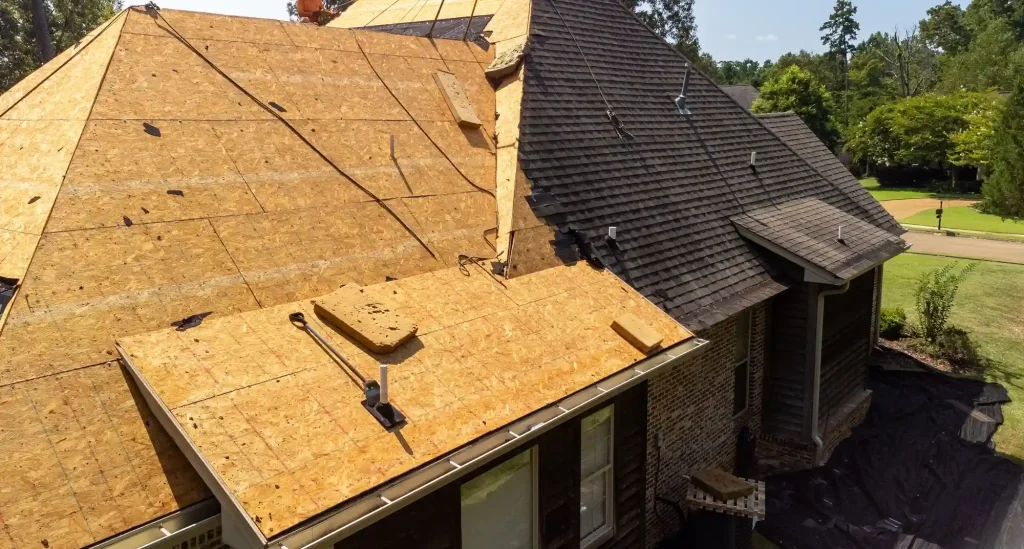
The foreman carefully checks everything when the roof is down to the bare plywood or OSB deck.
We fix damage from rot or water. We cut out any soft, rotten, or damaged decking and put in new plywood.
This is an important step that can’t be done while putting new shingles over old ones.
Things You Should Know:
Most of the time, the base contract price doesn’t include replacing the deck. It costs extra, usually between $75 and $125 per sheet of plywood.
A good contractor will show you pictures or take you through the damage before moving on.
Depending on how old the house is and how much water has gotten in before, most homes need 0 to 10 sheets of replacement.
What You Need to Do:
Ask the foreman to show you any decking that has been replaced. Being open about things is what sets good contractors apart from bad ones.
11:00 AM to 12:00 PM: Putting down the underlayment and the drip edge
What Happens:
Along the eaves and rakes, metal flashing called drip edge is put in place to guide water into the gutters.
They roll out synthetic underlayment (or regular felt paper) and staple it down all over the roof deck.
Compared to old-fashioned felt, synthetic underlayment is lighter, stronger, and better at keeping water out.
Valley metal is put in roof valleys (if needed) to handle a lot of water flow.
Why This Is Important:
The underlayment keeps water out as a second line of defense. The underlayment is the last thing that will keep water from getting under the shingles if the wind blows rain.
12:00 PM to 12:30 PM: Time for lunch
What goes on:
The crew has a short lunch break. Underlayment now protects the roof, so your home is safe even if it rains.
Now is a good time to ask the foreman how things are going.
12:30 PM to 3:00 PM: Installing shingles on the starter course and the field
What Happens:
Along the eaves, starter shingles are put in place to keep the wind from lifting them.
The bottom edge of the field shingles (the main part of the roof) is where they are laid.
There are strict rules about how many nails to use on each shingle; most manufacturers say to use 4 to 6 nails per shingle.
The crew works in groups, with cutters, installers, and nailers all working together.
What to Look Out For:
Properly staggering the seams of the shingles to keep water out.
Lines that are straight. A good crew will use chalk lines to make sure the rows are perfectly straight.
3:00 PM to 4:30 PM: Flashing, Ridge Caps, and Ventilation
What Happens:
To make sure that water can’t get in where the roof meets vertical surfaces, step flashing is put up along walls and dormers.
Replace the pipe boots (flashing around plumbing vents).
There are ridge cap shingles on the roof’s peak. These shingles are cut or shaped in a certain way so that the ridge can breathe while they shed water.
Ridge vent (if needed) is put in place to let hot air out of the attic, which makes shingles last longer and lowers cooling costs.
4:30 PM to 5:30 PM: Clean up and last look around
What Happens:
Magnetic sweepers go over the whole yard, driveway, and gutters to pick up any nails that are lying around.
Tarps are folded and put on the truck.
The foreman checks the quality one last time.
The walkthrough: The foreman walks around the outside of the house with you, shows you the finished work, explains any changes to the decking, and answers your questions.
What You Should Do:
Walk around the outside of your house. Look for any trash that might still be in the flower beds, driveway, or gutters.
Find out how to register for a warranty. Most companies want you to register online within 30 days.
If the job needs a second day (for example, if the roof is complicated, the pitch is steep, or the square footage is large), make sure to confirm the timeline for day two.
Day 2: Last Touches (If Necessary)
If the roof is very complicated and has a lot of valleys, dormers, or steep pitches, the job could take until the next morning.
Day 2 usually includes:
- Putting on the last ridge cap
- Cleaning gutters and sweeping with magnets
- Final check by the foreman
- Getting rid of the dumpster (usually done on its own)
What Happens If It Rains?
For safety reasons, a professional crew won’t work in heavy rain. But if it rains in the middle of the project:
If you put down underlayment: The roof is strong enough to keep the rain out until work starts again.
If the roof is still open to the deck, the crew will cover it with a tarp to keep your home safe.
Before you sign a contract, always ask your contractor what they will do if the weather changes.
Red Flags to Watch For During Your Replacement
| Red Flag | Why It’s a Problem |
|---|---|
| Crew arrives without dumpster or materials | Likely underprepared; delays are coming. |
| No tarps laid around the house | Nails will embed in lawn and landscaping; damage to shrubs is likely. |
| No decking inspection | Rot will be buried under new shingles, causing premature failure. |
| No magnetic sweeps after cleanup | Expect flat tires and barefoot hazards for weeks. |
| Foreman is unavailable for walkthrough | No accountability for final quality. |
Frequently Asked Questions (FAQ)
How long does a roof replacement take?
A standard residential roof (2,000–2,500 sq ft) typically takes 1–2 days. Complex roofs with steep slopes, multiple layers, or intricate architecture can take 3–5 days.
Will I be able to stay in my home during the replacement?
Yes. Most homeowners remain in their homes. However, the noise is significant during the tear-off phase (roughly 7:30 AM – 10:00 AM). If you have young children or work from home, consider making alternate arrangements for that window.
Do I need to be home during the roof replacement?
You do not need to be home the entire time, but you should be available for the initial walkthrough (morning) and the final walkthrough (end of day) to inspect the work and address any questions.
Will the crew damage my landscaping?
A reputable crew will lay tarps over shrubs and plants. However, some minor disturbance is unavoidable. Communicate with the foreman about any prized plants or delicate landscaping before work begins.
How do I know if my contractor pulled a permit?
Ask to see the permit or verify with your local building department. A legitimate contractor will secure all necessary permits before starting work.
Conclusion: Knowledge Turns Stress Into Confidence
A roof replacement is one of the largest home investments you’ll make. The process—while loud and disruptive—is temporary. Understanding the hour-by-hour timeline allows you to know what’s happening, when to ask questions, and how to spot a professional crew versus a fly-by-night operation.
The bottom line: A quality contractor will communicate clearly, protect your property, perform a thorough decking inspection, and leave your home cleaner than they found it.
Now that you know exactly what to expect, you can approach your roof replacement with confidence—and a fresh, durable roof that will protect your home for decades.