You have chosen the material for your roof. You have a contractor you can trust. Now comes the hard part that keeps homeowners awake at night: What color should the roof be?
It seems easy, but the truth is that the color of your roof will last for 20 to 50 years. If you choose the wrong thing, your home will look old, feel hotter than it should, or be harder to sell later. Choose wisely, and you’ll improve your home’s curb appeal, lower your summer energy bills, and add real money to its value.
Let’s go over how to make the right choice without getting a headache.
Why the color of your roof really matters
Most people think of roof color as just a cosmetic choice, like picking a paint color. But the color of your roof affects a lot more than just how it looks.
If you live in a hot area, having a black roof instead of a white roof can save you $300 to $500 a year on cooling costs. A dark roof helps melt snow and stops ice dams from forming in cold weather. Real estate agents will tell you that the right neutral roof color can add 5 to 7 percent to the price of your home when you sell it.
So, yes, this choice is important.
The first thing to think about is your climate.
Think about where you live before you even think about how things look. This is the most common mistake that homeowners make.
Arizona, Texas, Florida, and California are all hot places.
Light colors are good for you if you live in a place where summer feels like being in an oven. Instead of soaking up sunlight, white, light gray, cream, and beige reflect it. Your attic stays cooler, your air conditioner doesn’t have to work as hard, and your shingles don’t get too hot.
Not only do dark roofs in hot places cost you more in energy bills, but they also wear out faster. A black roof in Phoenix might only last 12 to 15 years instead of the 25 to 30 years you paid for.
Look for cool-roof certified shingles if you really want a dark roof in a hot area. They use special granules that look dark to the eye but reflect infrared heat away. They’re not as good as white shingles, but they’re a lot better than regular dark shingles.
Minnesota, New York, Colorado, and Michigan are all cold places.
In the cold north, you really want a roof that is darker. Black, dark gray, charcoal, and dark brown absorb heat and help the snow melt off your roof. That means there will be fewer ice dams, leaks will be less likely, and your building won’t have to work as hard.
In a snowy climate, a light roof can actually make winter problems worse. Snow stays on your roof longer, ice builds up, and you have problems that your neighbors with dark roofs don’t have.
Mixed Climates (Midwest, Mid-Atlantic, and Pacific Northwest)
You’re looking for balance if you have hot summers and cold winters. You look best in medium tones like charcoal gray, medium brown, slate blue, and weathered wood. They let you reflect on summer without losing the heat from winter.
Next, the design of your home
Once you know what the weather is like, you can start to think about the style of your home. A roof color that looks great on a modern farmhouse might not look good at all on a Victorian.
Colonial and Traditional Homes
Classic, timeless colors look best on these houses. Your best choices are black, dark gray, slate blue, and dark brown. Don’t choose anything too bright or trendy; a colonial with a bright green roof just looks lost.
Styles of Craftsman and Bungalow
Earth tones look great in Craftsman homes because they were made to blend in with nature. Think of colors like brown, mossy green, bronze, and wood that has been outside for a long time. Avoid bright blues and cool grays because they clash with the warm, natural look of the style.
Farmhouse in the present
This style is very popular right now, and the best color for the roof is black or charcoal. The white siding and high-contrast look of modern farmhouses are what make them so famous. Dark gray is fine, but the strong black-and-white mix is what makes the money.
Style from Spain and the Mediterranean
These houses want terracotta, clay brown, or light tan paint. Here, cool grays and blacks don’t fit in. If your home has a red tile roof and stucco walls, stick with warm earth tones.
Modern in the Middle Ages
Flat roofs and clean lines need flat, muted colors. The best colors are charcoal, cool gray, and muted earth tones. Don’t use bright colors with a lot of contrast; they take away from the style’s simple elegance.
Victorian homes can handle more character. It works with slate gray, deep green, burgundy, and black. But even with a Victorian, stay away from anything too crazy. A purple roof might be fun right now, but it will hurt the value of your home when you sell it.
How to Work with Your Siding
Your siding and roof need to work together. They don’t have to match, but they can’t clash at all.
Most traditional homes have roofs that are darker than their siding. This is a simple rule that designers follow. That gives it a look that is grounded and stable. Modern homes can switch this up by having light roofs and dark siding, but for most homes, dark on top looks better.
Some classic combos that always work:
- White or cream siding → Black, charcoal, slate blue, or dark gray
- Beige or tan siding → Brown, charcoal, or weathered wood
- Gray siding → Charcoal, black, or slate blue
- Brick (red or orange tones) → Black, charcoal, or dark brown
- Brick (white or gray tones) → Charcoal, slate, or black
- Blue siding → Charcoal, gray, or white (for coastal styles)
If you have stone or brick accents, pay attention to the undertones. Warm stone wants warm roof colors (browns, tans). Cool stone wants cool roof colors (grays, charcoals).
What Colors Really Sell for Resale Value
If you want to sell in the next ten years, this part is the most important.
The data on real estate is pretty clear: neutral colors sell the best. People who buy things are visual. They make a quick decision when they get to a house. They move on to the next listing if the roof color doesn’t feel right.
The Best Colors for Resale
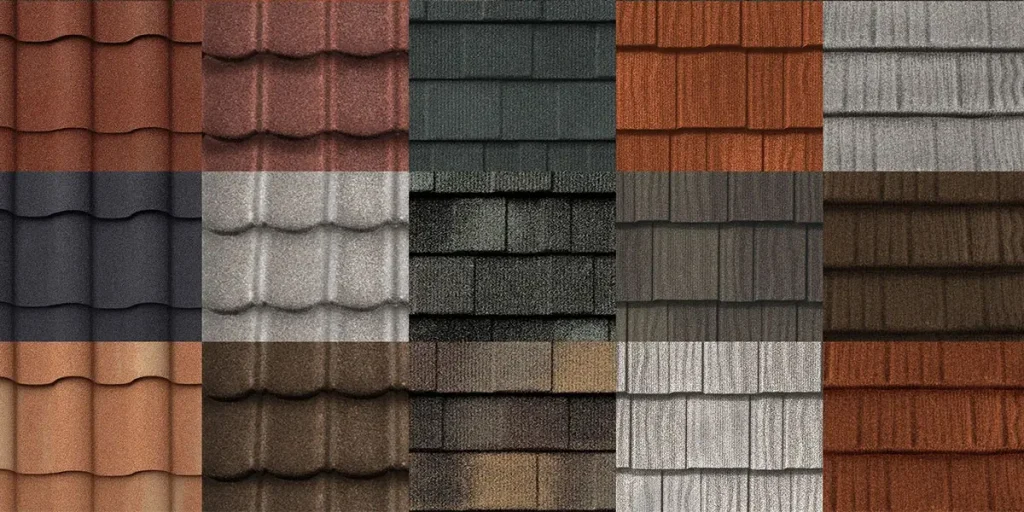
The safest and most flexible color for a roof is charcoal gray. It goes with almost any color of siding, style of architecture, and neighborhood. This is the answer if you want to make your home as appealing as possible to buyers.
Black and dark gray are next in line, especially for modern farmhouse and contemporary homes. The trend of black roofs has been going strong for years and doesn’t look like it’s going to stop anytime soon.
Slate blue-gray is a good choice if you want something that stands out but is still neutral enough to appeal to most buyers. It works best on homes by the sea and in the craftsman style.
A medium brown color and weathered wood are both strong and safe options. They won’t wow anyone, but they won’t turn anyone away either.
Colors That Are Bad for Resale
It’s hard to work with bright red and terracotta. They work if you live in the Mediterranean. If you don’t, they’ll cut down on the number of people who want to buy.
The same is true for green roofs. They can look great on a craftsman house in the woods. They don’t fit in on a colonial-style house in the suburbs.
White roofs show every bit of dirt, algae, and streaking, so pure white sounds clean and modern. They don’t look clean after a few years; they look dirty.
If you care about resale value, bright blue, purple, or red are almost always a bad idea. What seems fun and different to you will seem like work to someone else.
The Samples Rule: Don’t Pick from a Swatch
This is where homeowners make the biggest mistake.
You go to the store that sells roofing supplies, look at a small shingle sample the size of your hand, and say, “Yeah, that looks good.” After that, it is put on your whole roof, and it looks completely different.
Always ask for full samples of shingles. Most companies will send them to you for free or for a small fee. When they get there:
Put them against your siding, not on the ground. Look at them vertically because you’ll see them vertically on the roof.
Look at them at different times of the day. The way a color looks changes depending on the time of day and the weather.
Look at them from the street. That’s the view that counts.
If you can, put some shingles next to each other to see how the color looks on a larger scale.
A color that looks great in your hand might not look good on 2,000 square feet of your roof. Take the time to do this right.
Use the Tools for Visualization
You can upload a picture of your house to a free online tool from every major shingle maker and see how different roof colors look on it.
GAF Virtual Home Renovator
CertainTeed ColorView
Owens Corning Roof Color Viewer
These tools aren’t perfect, but they’ll help you avoid big problems. Before you buy them, play with them for an hour.
Don’t Forget About Your HOA
If you live in a neighborhood with a homeowners association, make sure you get written permission before you buy anything.
Some HOAs only let certain colors be used on roofs. Some need certain brands or cool-roof ratings. Some of them have rules that are hard to guess.
It’s a risk to get approval after the fact. If they say no, you might have to pay a fine or even have to re-roof your house. It’s worth it to take five minutes to send an email or make a phone call.
Common Mistakes When Choosing Roof Color
Picking from a small sample. We talked about this before, but it’s worth saying again. Small samples can be misleading.
- Not paying attention to your climate. Having a dark roof in Texas is a bad idea for both your wallet and your roof. In Minnesota, a light roof can cause ice dam problems. Let your climate be your guide.
- Matching your siding perfectly. Your roof shouldn’t look like your siding; it should go with it. Contrast makes things look deeper and more interesting.
- Too closely following a trend. That bright green roof might look great on Instagram, but trends don’t last. Think about whether you’ll still love it in ten years.
- Not thinking about your gutters. You can paint gutters, but metal that doesn’t match looks bad. If you can’t paint them, pick a roof color that goes with the colors of regular gutters, like white, brown, or black.
Trends in Roof Colors for 2026
If you want to know what’s in style right now:
Gray charcoal is still the best color. It’s the most popular color for roofs in the US, and it doesn’t look like it’s going to change.
Slate blue-gray is becoming more popular, especially in homes by the sea and those with a craftsman style. It’s neutral enough to appeal to a wide range of people, but it has more character than plain gray.
Wood that looks old and driftwood colors are very popular right now. They look natural, cover up flaws well, and go with a lot of different siding colors.
Dark tones for cool roofs are getting better and more popular. In hot places, a charcoal or black roof works almost as well as a light roof.
There is less interest in pure white roofs. They show dirt too easily and many buyers think they are too clean.
The Bottom Line
There are three questions to ask when picking a roof color:
Where do you live? If you live in a hot climate, you should use light or cool-roof certified colors. Dark colors are better for cold weather. Medium tones are best for mixed climates.
What kind of style does your home have? Classic colors are what traditional homes want. Earth tones are what the craftsman wants. Black is what modern farmhouse wants. Don’t fight the style; match it.
How long are you going to stay? If you plan to sell soon, stick to colors that are neutral and will appeal to a lot of people, like charcoal gray. If this is your forever home, pick what makes you happy, but don’t forget to check the climate and style filters first.
Get samples. Use the tools for visualization. If you need it, get approval from the HOA. And keep in mind that you’ll have to live with this choice for a long time. Take your time and do it right.
Frequently Asked Questions
What’s the most popular roof color?
Charcoal gray. It works with everything and appeals to the widest range of buyers.
What roof color saves the most energy?
White or light gray in hot climates. If you want dark colors, look for Energy Star certified cool-roof shingles.
Can I change my roof color later?
Only by replacing the whole roof. You can’t paint asphalt shingles, and you can’t change the color once they’re installed. Choose carefully.
What roof color hides imperfections best?
Multi-dimensional shingles with blended color patterns—like weathered wood or driftwood—hide minor unevenness better than solid, uniform colors.
Should my roof be lighter or darker than my siding?
For most traditional homes, darker is better. Modern homes can flip this, but traditional architecture looks best with a darker roof.