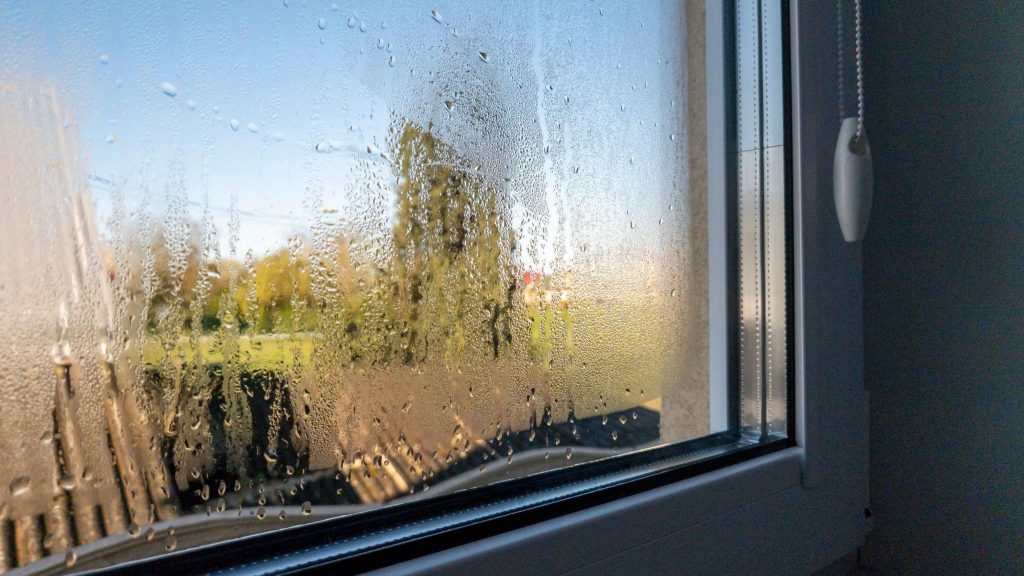
Window condensation is when water droplets form on your windows when it’s cold outside. A lot of homeowners notice this problem in the winter when the temperature outside drops but the air inside stays warm and humid.
A little condensation might not seem like a big deal, but too much can cause mold, damage window frames, and even make the air inside your home less healthy. There are a few easy ways to stop condensation and keep your home comfortable, which is good news.
In this guide, we’ll talk about why condensation happens and how to stop it.
Why do windows get condensation?
When warm, moist air inside your home touches a cold surface, like a window, condensation happens.
This happens when the air’s moisture turns into drops of water on the glass.
This is like how a glass of cold drink sweats on a hot day.
There is more condensation in the winter because
- The air inside is warmer than the air outside.
- Walls are warmer than windows.
- Heating systems make it harder to ventilate.
- The air inside the house gets more humid.
Signs that your windows are too wet
It’s normal for windows to get a little wet when it’s really cold outside. But too much condensation can cause problems.
Look out for these signs:
- Dripping water down the window
- Mold growing around the frames of the windows
- Paint that is coming off near windows
- The room smells musty.
It’s important to lower the humidity inside if condensation happens a lot.
Simple Ways to Stop Windows from Getting Wet
Lower the humidity inside
Window condensation is mostly caused by high humidity inside the house.
Try to keep the humidity inside between 30% and 50%.
You can lower the humidity by
- Using a dehumidifier
- Turning on the fans in the bathroom and kitchen
- Showering for less time
- Putting lids on pots while cooking
Less humidity means less moisture that can turn into water droplets.
Make the air flow better
When air doesn’t move well, moisture can build up near windows.
Better airflow can help keep glass surfaces warmer and cut down on condensation.
Give these tips a try:
- Leave the curtains a little bit open.
- Take furniture away from the windows.
- Use fans in the ceiling or in small rooms.
Good airflow helps keep the temperature and humidity at a good level.
Get a dehumidifier
If the humidity stays high, a dehumidifier can take out extra moisture from the air.
Dehumidifiers are very useful for:
- Basements
- Toilets
- Rooms for doing laundry
Running one in the winter can help a lot with condensation issues.
Open Windows Now and Then
Even in the winter, opening windows for a few minutes can help let out moisture that is stuck.
Fresh air lets humid air inside escape and makes the air flow better.
Ventilating for just 5 to 10 minutes can make a big difference.
Get double-pane windows instead of single-pane ones.
Single-pane windows from the past are much colder than double-pane windows made today.
Because they are colder, condensation happens more easily.
You can:
- Lower condensation
- Make the insulation better
- Less money spent on heating
This solution costs more, but it can make your home more comfortable overall.
Put Window Insulation Film on
Window insulation film is a cheap way to add an extra layer of insulation.
It keeps the inner glass surface warmer, which cuts down on condensation.
This is a common short-term fix in the winter.
Keep Mold Away from Windows
Too much moisture around windows can be the perfect place for mold to grow.
To stop mold:
- Every day, wipe the windows dry.
- Keep the humidity in check
- Keep the frames of your windows clean.
- Make sure there is enough air flow.
Taking care of condensation early can help keep your home safe.
When condensation could be a bigger issue
Condensation can sometimes mean bigger problems, like:
- Bad insulation in the home
- Broken window seals
- Problems with HVAC ventilation
- If there is condensation between the panes of glass, the window seal may be broken and you may need to get a new window.
Last Thoughts
In the winter, condensation on windows is a common problem, but it can usually be fixed with a few simple changes. Keeping the right amount of ventilation, lowering the humidity inside, and improving airflow can all help keep your windows safe from water damage.
These steps will help you keep your home more comfortable and avoid problems with moisture during the colder months.