One of the most frequent plumbing issues that homeowners deal with is a running toilet. Your toilet can waste a surprising amount of water and raise your monthly water bill if it runs for a long time after you flush it.
The good news is that fixing a running toilet is frequently easy and doesn’t call for expert assistance. We’ll explain why toilets keep running in this guide, along with the simplest solutions.
The Reasons a Running Toilet Is an Issue
Water continuously flows from the tank into the bowl when a toilet is running. This can result in hundreds of gallons of water being wasted every day, which raises your utility bill and unnecessarily strains your plumbing system.
Parts inside the toilet tank may deteriorate more quickly if the issue is ignored for an extended period of time.
Typical Reasons for a Running Toilet
The first step in solving a problem is to identify its root cause. These are the most typical causes of a toilet’s continuous operation.
A worn-out or misaligned flapper
The toilet tank’s flapper is a rubber valve located at the bottom. When you flush, it opens, and it closes to prevent water from entering the bowl.
The flapper may not seal correctly if it gets worn out, cracked, or misaligned. The toilet runs constantly as a result of water slowly seeping into the bowl.
How to resolve it:
- Cut off the water supply.
- Take out the old flapper.
Install a new one; they are cheap and simple to swap out.
An excessively high float
A float inside the tank regulates the water level. Water may overflow into the overflow tube and keep the toilet running if the float is set too high.
How to resolve it:
- Find the screw for the float adjustment.
- Reduce the float a little.
- Check to see if the issue resolves after flushing the toilet.
The problem is frequently quickly resolved by adjusting the float.
A malfunctioning fill valve
After flushing, the fill valve regulates the flow of water into the toilet tank. It might permit water to flow even when the tank is full if it gets worn out or damaged.
The following are indicators of a malfunctioning fill valve:
- Continuous sound of water
- The tank never stops filling completely.
- Very slowly, the toilet refills
The best course of action in this situation is typically to replace the fill valve.
Chain Issues
The flapper and toilet handle are joined by the chain. The flapper might not close correctly if the chain is too tight or tangled.
How to resolve it:
- Let the tank lid open.
- Verify the length of the chain.
- Ensure that there is some slack.
An appropriately adjusted chain facilitates a proper flapper seal.
How to Fix a Quick Running Toilet Step-by-Step
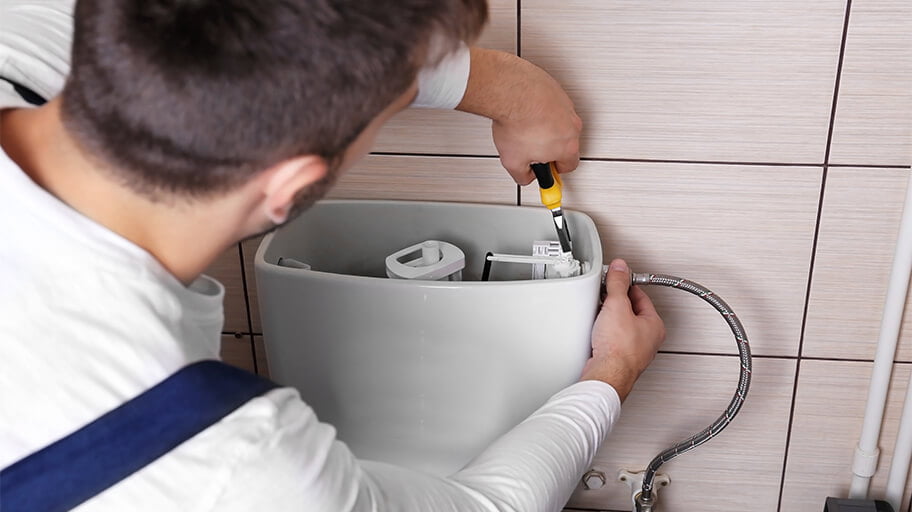
You can diagnose and repair a running toilet by following this easy procedure.
- Take off the lid of the toilet tank.
- Watch how the components move after flushing the toilet.
- Verify that the flapper has fully closed.
- If the water level is too high, adjust the float.
- Check to see if the chain is too tight.
- If required, replace worn components.
The majority of these repairs are inexpensive and take less than ten minutes.
When to Make a Plumber Call
While the majority of running toilet issues are simple to resolve, you might want to contact a plumber if:
After parts are changed, the toilet keeps operating.
You see water seeping around the toilet’s base.
There is no refilling of the tank.
If necessary, a specialist can identify more complicated plumbing problems.
How to Stop the Toilet from Running
It is simpler to avoid toilet issues than to fix them after the fact. Here are some pointers to maintain the functionality of your toilet.
- Steer clear of using harsh cleaning agents inside the tank.
- Once or twice a year, check the flapper.
- Replace worn components as soon as possible.
- Periodically check the tank for leaks.
Your toilet can last many years trouble-free with routine maintenance.
Concluding Remarks
Although the solution is frequently straightforward, a toilet that continues to run after flushing can waste water and increase your utility costs. The problem can often be swiftly resolved by changing the flapper, adjusting the float, or repairing the chain.
You can keep your toilet operating effectively and prevent needless plumbing repairs by learning how it functions and doing basic maintenance.